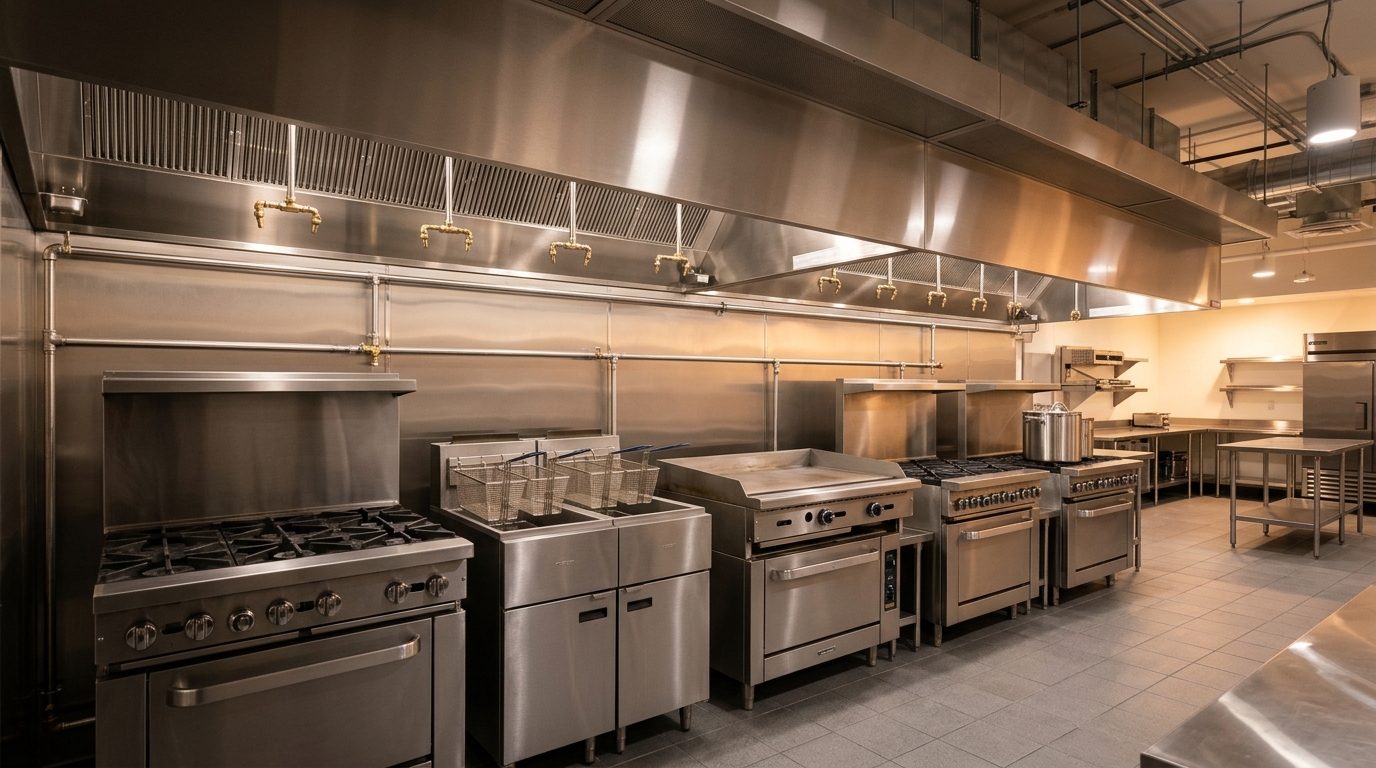
Written by IEM Architects · Inspection & Verification, Fire & Life Safety · Reading time: about 14 minutes
Best for: Site inspectors, fire safety consultants, commissioning agents, architects performing construction administration, kitchen equipment contractors, and facility managers preparing for annual fire safety audits.
Who This Guide Is For
This guide is for professionals who need to inspect the fire suppression system in a commercial kitchen (restaurant, hotel, mall food court, or institutional food service) and produce findings that will hold up under review by the authority having jurisdiction (AHJ).
It assumes you know what a Type I hood and a wet chemical suppression system are. It also assumes you have the permitted kitchen equipment drawings and the suppression system shop drawings, and that you are verifying compliance rather than designing from scratch.
If you are still planning the kitchen that the system protects, start with our restaurant kitchen layout workflow. This article is the field counterpart: what to check, in what order, and what evidence to collect.
Scope note: Code editions and local amendments vary by jurisdiction. The references here (UL 300, NFPA 17A, NFPA 96, NFPA 10, and the International Fire and Mechanical Codes) are the common baseline. Always confirm the editions adopted by your AHJ and follow the system manufacturer’s listed installation manual.
Why Kitchen Suppression Deserves Its Own Inspection
Commercial cooking combines high heat, open flame or hot elements, and cooking oils that can reach autoignition temperatures. Water spreads a grease fire, and ordinary dry chemical agents do not reliably prevent re-ignition in modern, high-efficiency fryers.
Kitchen hoods and ducts are therefore protected by wet chemical systems (potassium carbonate, potassium acetate, or similar blends) listed to UL 300 and installed to NFPA 17A and NFPA 96. When wet chemical agent hits burning oil, it reacts to form a soapy layer (saponification) that cools the oil and seals the surface so it cannot re-ignite.
That is why the inspection cannot stop at “there is a suppression system.” The right system, in the right configuration, must protect the appliances that are actually installed. Nozzle type, nozzle placement, plenum and duct coverage, fuel shutoff, manual actuation, and maintenance records all have to line up.
A system that is installed but not configured for the installed equipment can create a false sense of protection.
From the Field: On hotel and mall food service projects submitted through Qatar Civil Defense, including hotel kitchen fit-outs and mall food courts, kitchen suppression was consistently one of the most detailed handover items. The recurring deficiencies were rarely about whether a system existed. They were about configuration: nozzles listed for the wrong appliance, coverage not updated after the kitchen equipment changed, gas shutoff valves installed but never interlocked, and manual pull stations mounted behind a door or inside a locked cabinet. These systems passed a “does it exist?” check and failed a “will it work?” check.
Quick Reference: The Standards Behind the Inspection
| Standard | What it governs |
|---|---|
| UL 300 | Listing and fire testing of wet chemical systems for commercial cooking |
| NFPA 17A | Design, installation, acceptance, inspection, and maintenance of wet chemical systems |
| NFPA 96 | Ventilation control and fire protection of commercial cooking operations (hoods, ducts, fans, cleaning, clearances) |
| NFPA 10 | Portable fire extinguishers, including Class K |
| NFPA 72 | Fire alarm integration |
| IFC 904.12 / IMC Ch. 5 | Model-code requirements for commercial cooking systems and exhaust |
Step 1: Confirm the Equipment Schedule and Suppression Drawings
Start with paper before you walk the kitchen.
- Kitchen equipment schedule. Confirm it lists every cooking appliance (ranges, fryers, griddles, charbroilers, woks, ovens) with type, fuel (gas or electric), and dimensions.
- Hood schedule. Confirm which appliances sit under which hood, along with hood dimensions, exhaust rate, and duct routing.
- Suppression shop drawings. Confirm nozzle layout and types, cylinder size, actuation method, fuel shutoff arrangement, and pull station location.
- Cross-check. Every appliance that produces grease-laden vapors must be under a Type I hood and covered by the listed system. An appliance outside the protected zone is unprotected and non-compliant.
The most common paperwork deficiency is shop drawings based on the original equipment schedule, while the fit-out installed different appliances. A fryer that was 400 mm wide on the drawing becomes 600 mm wide on site, and the nozzle coverage designed for the smaller unit is no longer adequate.
Also confirm that the system is UL 300 listed and that the permit and the contractor’s certification are on file.
Step 2: Verify the Nozzle Layout and Appliance Coverage
The nozzle layout is the heart of the system. Check four things:
- Nozzle type. Each nozzle must be listed for the appliance it protects. Nozzles for fryers, griddles, woks, and charbroilers are not interchangeable. A nozzle that looks right but carries the wrong listing is a deficiency.
- Coverage. Every cooking surface must fall within the coverage area the manufacturer’s manual specifies for that appliance type. A two-vat fryer may need one or two nozzles depending on vat size.
- Height and angle. Mounting height and aim must match the manual. A nozzle that is too high or mis-aimed may not deliver the required agent concentration.
- Condition. Nozzles must be clean, unobstructed, and never painted. Blow-off caps must be installed and intact, because they keep grease out of the nozzle and release on discharge.
Appliance separation: Where fryers sit next to open-flame appliances, confirm the separation distance or baffle that the manufacturer’s listing and NFPA 17A require.
Changed appliances without an updated nozzle layout are the largest single category of deficiency on completed kitchens.
Step 3: Verify Hood, Plenum, Duct, and Exhaust Protection
The system protects more than the cooking surface. It protects the hood plenum and exhaust duct, where grease accumulates and where many kitchen fires spread.
- Plenum protection. The space above the filters must have nozzles per the manufacturer’s listing. A hood without plenum nozzles is a deficiency even if the appliance nozzles are correct.
- Duct protection. Duct nozzles are typically placed at the duct entrance, with quantity based on duct size per the listing. Confirm against the manual rather than assuming a rule of thumb. Modified duct runs (extra elbows, transitions, longer lengths) may need review by the system designer.
- Duct construction (NFPA 96). Check the specified material and gauge, liquid-tight welded joints, and access panels for cleaning. Also check clearances to combustibles, which are typically 18 in (457 mm) for unprotected ducts, with reduced clearances only where a listed enclosure or protection method allows.
- Filters. Grease filters must be listed and installed at the required angle with a grease collection path. Confirm none are missing or substituted.
- Exhaust fan. NFPA 96 generally requires exhaust fans to continue operating after the suppression system actuates, unless the system’s listing requires shutdown. Confirm which applies in the manual, and confirm that makeup air behavior matches the design intent and adopted code. Do not assume fan shutdown is required.
Plenum and duct nozzles sit above the filters and behind access panels, so they are easy to miss unless you know to look.
Step 4: Verify Fuel and Power Shutoff
A system that extinguishes the fire while fuel keeps flowing invites re-ignition.
- Gas shutoff. A listed gas shutoff valve must be installed in the supply line to the protected appliances and must close on actuation. A valve that must be closed by hand is not an automatic shutoff.
- Electric shutoff. For electric appliances, confirm a shunt trip or contactor interlock removes power on actuation. A manual switch does not qualify.
- Manual reset. Shutoff devices must require manual reset after actuation. Confirm the valve does not restore automatically.
- Scope of shutoff. NFPA 96 requires shutoff of fuel and heat to all equipment served by the protected hood or duct. Confirm no appliance under the hood is left on a separate unprotected supply.
- Functional test. Operate the system (or use the manufacturer’s test method) and confirm the gas valve closes and power drops out. This is the most commonly skipped test and the one most often failed when it is actually performed.
Step 5: Verify Manual Actuation, Detection, and Alarm
- Manual pull station. It must be on the path of egress from the kitchen, clearly labeled, unobstructed, and mounted within the height and distance limits in your adopted code and the manufacturer’s listing. IFC 904.12 sets a location window along the egress path, so verify the exact figures for your edition. A pull station inside a locked cabinet, behind a door, or where the operator must pass the fire to reach it is a deficiency, even if it is technically “installed.”
- Automatic actuation. Confirm fusible links or electronic detection are installed, are rated for the appliance or plenum temperature the manual specifies, and are not painted, corroded, or coated with grease.
- Alarm integration. Actuation must trigger an alarm. Confirm the signal reaches the building fire alarm control unit and, where required locally, notifies the fire service. Verify against NFPA 72 and the AHJ.
- Sequence. Confirm the fuel shutoff and alarm both occur on actuation, in the sequence the manual and code require.
- Operating instructions. Confirm instructions are posted near the pull station and that staff know how to use it.
Step 6: Verify Portable Extinguishers and Staff Readiness
The fixed system is only part of the protection.
- Class K extinguisher. A Class K (wet chemical) portable extinguisher should be within the travel distance NFPA 10 sets for cooking hazards, commonly cited as 30 ft (9.1 m). Check that it is charged, tagged, and mounted correctly. Where the system manufacturer requires it, confirm that the pull station and extinguisher locations match the design.
- Staff training. Ask how staff are trained to actuate the system and evacuate. NFPA 96 expects ongoing training, and an untrained crew is a practical failure even when the hardware passes.
Step 7: Verify Test, Maintenance, and Cleaning Records
A compliant system at handover can become non-compliant if it is never maintained.
- Initial acceptance test. Look for a record showing a qualified technician tested actuation, fuel shutoff, and alarm.
- Semi-annual inspection. Look for records showing nozzles, links, cylinder pressure, and fuel shutoff were inspected, and that deficiencies were corrected. Check the dates against the required interval.
- Fusible links. Confirm they are replaced at the intervals the manufacturer and adopted code specify.
- Cylinder maintenance. Stored-pressure wet chemical cylinders typically follow a 6-year internal maintenance and 12-year hydrostatic test cycle under NFPA 17A. Check the tags and records.
- Exhaust cleaning (NFPA 96). Inspection and cleaning frequency depends on cooking volume: monthly for solid-fuel cooking, quarterly for high-volume operations (24-hour, charbroiling, wok), semi-annually for moderate volume, and annually for low volume. Look for the contractor’s service tag or certificate and for visible grease buildup in the plenum and duct.
- Service tags. Confirm that tags on the system and cylinder are current and legible.
A system with no records is a system of unknown compliance.
Special Conditions to Watch For
- Solid-fuel cooking (wood-fired ovens, charcoal): NFPA 96 imposes additional requirements, including separate duct and fire protection arrangements and spark control. Do not treat these like gas appliances.
- Appliance changes after handover: Any new fryer, wok, or charbroiler may require a revised nozzle layout. Treat equipment replacement as a trigger for re-evaluation by a certified system contractor.
- Shared hoods and ducts: Confirm a single protected system covers every appliance connected to the shared exhaust.
Deficiency Severity Guide
Classifying findings helps owners prioritize and protects your report if it is later reviewed.
| Severity | Typical examples |
|---|---|
| Critical (system may not work) | Nozzle listed for the wrong appliance; unprotected appliance under hood; gas valve not interlocked; pull station inaccessible; no plenum or duct protection |
| Major (reduced reliability) | Expired semi-annual inspection; painted or missing blow-off caps; extinguisher missing or out of date; fusible link wrong rating |
| Minor (documentation or housekeeping) | Missing signage or operating instructions; illegible tags; incomplete record sheet |
Evidence to Collect
For each step, document:
- Photographs of nozzles, links, pull station, gas valve, and cylinder tags, with location noted
- Appliance nameplates and dimensions compared to the shop drawing
- Manufacturer’s manual page and model numbers referenced for each finding
- Test results with date, tester, and method
- Copies or photos of the service tags and records you reviewed
Consistent documentation is what makes a finding defensible. See our guide on writing inspection reports for the reporting format.
Free Kitchen Suppression Inspection Checklist Tool
To record your findings as you walk the kitchen, use our free Restaurant Kitchen Fire Suppression Inspection Checklist. It follows the seven steps in this guide, from drawings and nozzle coverage through fuel shutoff, actuation, extinguishers, and records.
Mark each item Pass, Fail, or N/A, add notes for any deficiency, and the tool summarizes your findings by severity so you can copy them into your inspection report. It records your observations only and does not certify compliance, so always confirm each finding against the manufacturer’s listing, the adopted code, and your authority having jurisdiction.
Frequently Asked Questions
Is a wet chemical system required for every commercial kitchen?
Where cooking produces grease-laden vapors, NFPA 96 and the model codes generally require a listed fire-extinguishing system on the hood and duct. Confirm the requirements and any exceptions with your AHJ.
How often should the system be inspected?
NFPA 17A and the manufacturer require inspection at least semi-annually by a qualified technician, with additional maintenance milestones for cylinders and links. Your AHJ may require more frequent checks.
Should the exhaust fan shut off when the system discharges?
Generally no. NFPA 96 expects the exhaust fan to keep operating unless the system’s listing says otherwise. Fuel and heat sources are what must be shut off.
What is the most common deficiency?
Appliances changed during fit-out or later, without a matching nozzle layout update.
Can I rely on a previous inspection tag?
A tag shows what was done on that date. It does not confirm that the installed equipment still matches the design, so verify the layout against the current appliances.
Conclusion
A reliable kitchen suppression inspection follows a fixed order: confirm the drawings, verify nozzle coverage, check the hood and duct, test the fuel shutoff, check actuation and alarm, check extinguishers and training, and review the records. Skipping any step leaves a gap in exactly the place a fire will find it, and documenting each step is what makes the result defensible.
Related Reading on ArchFieldGuide
- Restaurant Layout Design Workflow: Kitchen, Dining, and Service Circulation
- How to Lay Out a Restaurant Kitchen: Cooking, Prep, and Wash Zones
- How to Inspect a Restaurant’s Exhaust System: Hoods, Ducts, and Fans
- Fire Alarm System Inspection Workflow: Devices, Panel, and Zones
- Inspection Report Writing: How to Document Deficiencies Clearly
About This Guide
This article is part of the ArchFieldGuide reference library, a practical, workflow-based resource connecting design decisions, rules of thumb, and on-site verification for architects, engineers, and fire safety consultants.
The workflow described here reflects 20+ years of architectural practice across commercial, hospitality, institutional, healthcare, and residential projects in Qatar, the Philippines, and internationally, including Doha Municipality and Qatar Civil Defense submissions and inspections. Kitchen suppression inspection has been part of construction administration and site supervision on hotel and mall food service projects.
This article is for general informational purposes and does not replace the adopted codes, the manufacturer’s installation manual, or the requirements of your authority having jurisdiction.